(424) 242-1130
Living with a mental health diagnosis does not automatically rule out sober living. It also should not be assumed that a diagnosis alone tells you whether someone can live successfully in a shared sober living environment.
For residents and families, one concern is how a sober living home responds when someone has mental health needs alongside recovery. One Reddit user described a situation that raised exactly that concern:
Reddit User Asks
“He is 7 months clean. He paid his rent, went to meetings, did not relapse, did not argue with anyone. Last night at 11 PM, they got him out of bed, called a meeting, and kicked him out of the house. They said they cannot deal with him being schizo, and he walks down the stairs too loudly?”
Shared living can raise concerns from the other side as well. Another resident described feeling uncertain after a housemate returned from psychiatric care:
“my roommate just came out of the psych ward for intrusive thoughts. I am 10 feet away and sleep right next to him.”
— r/Sober
These situations are different, but they point to an important distinction. A mental health diagnosis should not automatically determine how someone is viewed in a sober living home, while residents may still have genuine questions about shared living, boundaries, support, and what happens when someone's needs change.
Dual diagnosis generally refers to co-occurring mental health and substance use conditions. You may also hear these described as co-occurring disorders.
For men considering dual diagnosis sober living, understanding the boundaries of the home is important. Sober living can provide a substance-free environment, community, routine, and accountability, but it is not a psychiatric facility or a replacement for professional mental health care.
What Does Dual Diagnosis Mean in Sober Living?
Dual diagnosis generally refers to having both a mental health condition and a substance use disorder. You may also hear the term co-occurring disorders used to describe the same combination.
Co-occurring conditions can look very different from one person to another. Someone may experience depression, anxiety, bipolar disorder, schizophrenia, or another mental health condition alongside challenges related to alcohol or other substances. The diagnosis alone does not tell you what kind of residential or professional support that person needs.
In sober living, the important distinction is between housing support and mental health care. A sober living home can provide a substance-free environment, peer community, routines, and accountability, while psychiatric care, therapy, medication decisions, and other clinical services remain the responsibility of qualified healthcare professionals.
Can You Live in Sober Living With a Mental Health Diagnosis?
For some men with co-occurring disorders, sober living can be one part of a broader recovery plan. The key is understanding what the home provides and what still needs to come from qualified mental health professionals.
Before choosing a sober living home, consider whether its residential environment aligns with your current needs.
Managing Psychiatric Medication in Sober Living
If you take psychiatric medication, ask about the home's medication policies before admission. Policies can differ between residences, so avoid assuming that one home's procedures apply everywhere.
Questions to ask include:
- Can prescribed medications be kept in the home?
- How are medications stored?
- What procedures apply to taking medication?
- What prescription information does the home request?
- What happens when a prescription changes?
- Who should you speak with if a medication-related issue affects life in the home?
Medication decisions should remain with appropriately qualified healthcare professionals. Residents should not start, stop, or alter psychiatric medication based solely on advice from housemates or other people who are not qualified to make those decisions.
You can learn more about medication management in sober living when preparing questions for an individual residence.
Staying Connected With Your Psychiatrist or Therapist
If you already have a psychiatrist, therapist, or another mental health provider, consider how you will maintain that relationship after moving.
Before admission, think about:
- How you will travel to appointments
- Whether appointments work with house responsibilities
- Where you can attend telehealth appointments privately
- How you will manage prescription follow-ups
- Who you will contact if your mental health needs change
The residence and your healthcare providers have different roles. Keeping those roles clear can help you plan for both your living environment and ongoing professional care.
What Housing Rights Apply to Residents With Mental Health Disabilities?
The Fair Housing Act provides disability protections in covered housing. Under the Act, disability can include a mental impairment that substantially limits one or more major life activities.
Housing decisions should not be based on fear, stereotypes, or assumptions about a disability. When a housing provider considers whether someone presents a direct threat, DOJ and HUD guidance says the decision should be based on an individualized assessment using reliable, objective evidence.
Fair Housing and Disability Protections
The Fair Housing Act prohibits covered housing providers from treating applicants or residents less favorably because of a disability. It also provides for reasonable accommodations when they may be necessary to give a person with a disability an equal opportunity to use and enjoy the housing.
These protections do not mean that specific conduct or safety concerns must be ignored. How the law applies depends on the individual circumstances.
How Can Reasonable Accommodations Apply in Sober Living?
A reasonable accommodation can involve adjusting a housing rule, policy, practice, or service when an adjustment is needed because of a person's disability. Its purpose is to provide an equal opportunity to use and enjoy the housing.
Not every request must be granted. DOJ and HUD explain that there must be a connection between the disability and the requested accommodation. A request may also be denied if it would create an undue financial and administrative burden or fundamentally change the nature of the provider's operations.
Fair housing requirements can vary based on the type of residence, its structure, applicable exemptions, and individual circumstances.
How Can Mental Health Needs Affect Shared Living?
Sober living means sharing a home with people who have different personalities, routines, boundaries, and needs.
A mental health diagnosis should not be treated as a character flaw or used to make assumptions about someone's behavior. At the same time, residents need ways to communicate concerns when sharing bedrooms and common areas.
Creating a Comfortable Shared Living Environment
If aspects of your environment affect sleep, privacy, or day-to-day well-being, ask about them before moving in.
Consider:
- Bedroom and roommate arrangements
- Quiet hours
- Privacy
- Nighttime routines
- Use of common areas
- How roommate disagreements are addressed
- Whether room changes are possible
Understanding house culture and conflict can also help you think about communication, boundaries, and everyday life in a shared sober living home.
What to Do When You Have Concerns About a Housemate
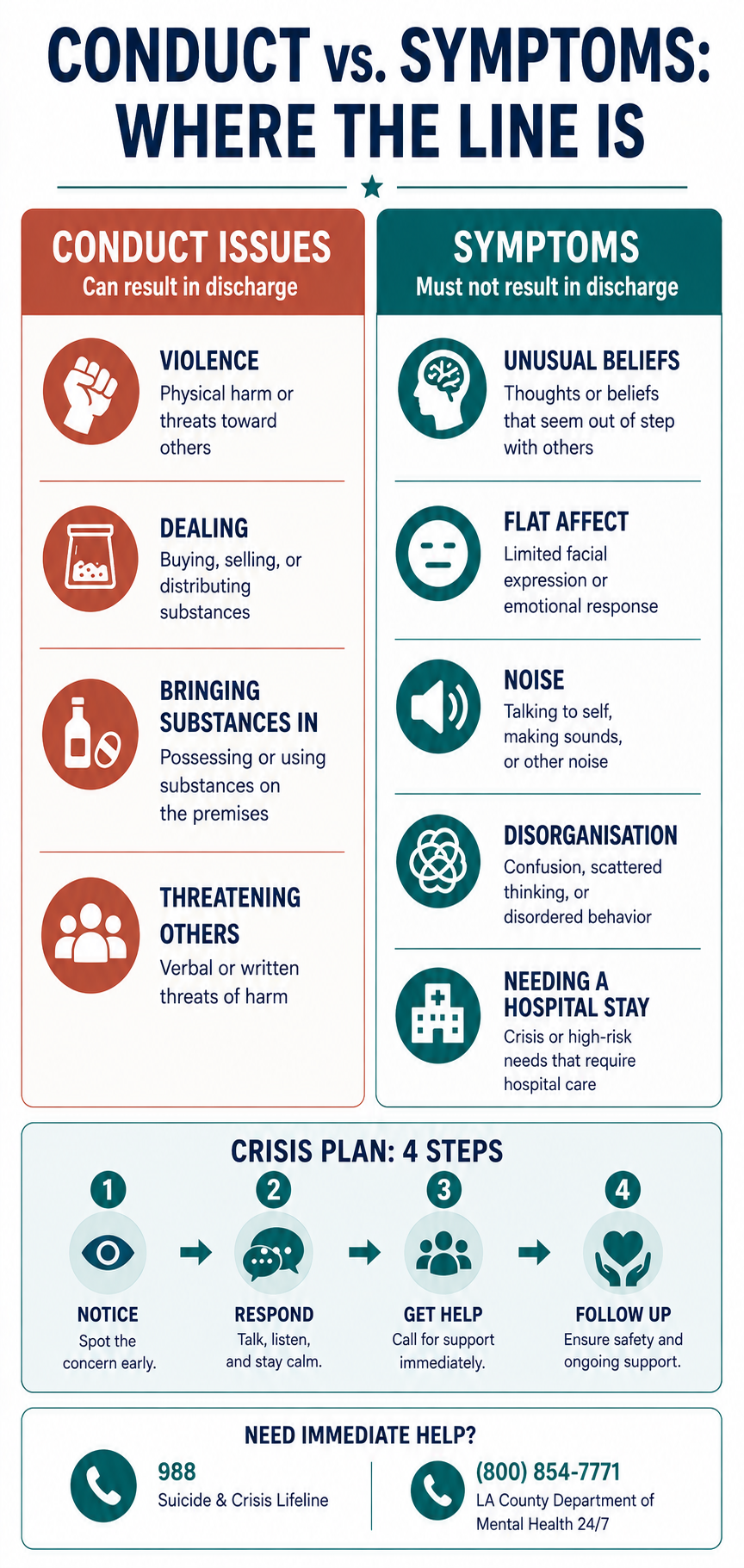
Not every unusual behavior is a crisis. A diagnosis alone also does not mean someone presents a danger to other residents.
If you have concerns, focus on the specific behavior or situation rather than trying to interpret another person's diagnosis.
A useful approach is to:
- Describe what happened
- Explain when and where it occurred
- Identify how it affected the shared living environment
- Bring ordinary household concerns to the appropriate person in the home
- Seek appropriate emergency assistance if there is an immediate danger
It can also help to understand how our houses are staffed so you know the roles of the people supporting day-to-day life in the residence.
When Might You Need More Support Than Sober Living Can Provide?
There is an important difference between needing professional support while living in sober living and needing services that a sober living residence does not provide.
Sober living alone may not provide everything you currently need if your situation requires services such as:
- Continuous clinical monitoring
- Intensive psychiatric support
- Crisis stabilization
- Medical supervision not available in the residence
- Another service outside the home's residential role
A diagnosis alone does not make this determination. Someone living with bipolar disorder, schizophrenia, depression, or another mental health diagnosis should not be assumed to require a particular level of support simply because of the diagnostic label.
A qualified healthcare professional can assess your individual circumstances and help you consider appropriate options. Needs can also change over time, so the appropriate living environment at one point may not be the same later.
Why Is a Mental Health Crisis Plan Important in Sober Living?
A crisis plan can establish what steps should be taken if your mental health changes significantly.
Whenever possible, develop the plan before a crisis occurs and involve the qualified professionals responsible for your care.
What Should a Crisis Plan Include?
The details should reflect your individual circumstances and professional guidance. A plan may clarify:
- Who to contact first. Identify the appropriate professional or emergency resource.
- Which healthcare professionals are involved. Keep relevant contact information accessible.
- Who your emergency contact is. Decide whom you want involved when appropriate.
- What changes may indicate you need additional help. Discuss these with your healthcare provider.
- Where you can seek urgent professional support. Know your options before they are needed.
- What happens if you temporarily leave the residence. Ask about policies concerning absences and returning to the home.
Do not assume every sober living residence handles hospitalization or temporary absences in the same way. These are useful policies to clarify before moving in when they are relevant to you.
A sober living home is not an emergency psychiatric service. Crisis planning should reflect the individual's needs and guidance from appropriate professionals.
Choosing a Sober Living Home That Meets Your Needs
Choosing dual diagnosis sober living involves more than asking whether a home accepts people with a particular diagnosis. You need to understand what the residence provides and what will continue through your outside healthcare professionals.
Before deciding on a home, consider:
- Whether its living environment suits your current needs
- How psychiatric medications are handled
- Whether outside appointments can continue
- How changes in mental health needs are addressed
- What crisis-related policies you should understand
- How shared-living concerns are handled
- Whether the home can provide the residential support you currently need
At Design for Recovery, we provide sober living for men in Los Angeles. Understanding your needs before moving in can help you ask clearer questions about the home, its expectations, and the role it can play alongside your existing support.
- What Does Dual Diagnosis Mean in Sober Living?
- Can You Live in Sober Living With a Mental Health Diagnosis?
- What Housing Rights Apply to Residents With Mental Health Disabilities?
- How Can Mental Health Needs Affect Shared Living?
- When Might You Need More Support Than Sober Living Can Provide?
- Why Is a Mental Health Crisis Plan Important in Sober Living?
Begin Lasting Sobriety Now!



Frequently Asked Questions About Men's Sober Living in Los Angeles
What information is requested can depend on the residence and circumstances. Ask what information is required during admission, why it is requested, and how it will be used. If you have questions about legal disclosure requirements, seek qualified legal guidance.
Taking prescribed psychiatric medication does not by itself determine whether sober living is appropriate. Individual residences can have different medication policies, so ask how prescriptions are handled before moving in. Continue following the guidance of the qualified healthcare professional responsible for your medication.
Ask what the home can and cannot provide, how medication is handled, and how outside appointments work with house responsibilities. You may also want to ask about privacy, crisis procedures, shared rooms, and temporary absences. Clear answers can help you compare the home's residential capabilities with your individual needs.
Outside mental health care may continue while someone lives in sober living, depending on individual circumstances and house expectations. Ask how appointments work with the home's schedule and consider transportation or telehealth privacy. Sober living should not be assumed to replace appropriate professional mental health care.
Ask about quiet hours, room arrangements, nighttime routines, and whether room changes may be available. If sleep difficulties are related to a mental health condition or medication, discuss them with an appropriate healthcare professional. Do not assume every residence can provide private rooms or the same accommodations.
A family member may be part of a crisis plan when you want them involved and doing so is appropriate for your circumstances. Discuss with your healthcare provider whom you want contacted and what role that person should have. You can also ask the sober living home about its privacy and emergency-contact procedures.
- U.S. Department of Housing and Urban Development, & U.S. Department of Justice. (2004, May 14). Joint statement of the Department of Housing and Urban Development and the Department of Justice: Reasonable accommodations under the Fair Housing Act. U.S. Department of Justice. https://www.justice.gov/crt/us-department-housing-and-urban-development