(424) 242-1130
Reddit User Asks
“I am hoping that I can bring my gaming computer, but I am worried it could be stolen. I do not mind sharing a room, as I did so in college, but I am hoping that they will at least be my age.”
“are you allowed to drive yourself to work if you have a vehicle?”
— r/Prison
Moving into sober living means thinking beyond clothes and everyday essentials. You may have a car you need for work, tools you rely on for your job, a computer you use every day, or a bike and other equipment you want to bring with you.
Some belongings are part of your everyday routine, while others need more space or careful storage. If you are bringing expensive electronics, work equipment, or a vehicle, you may also want to know how those belongings can be kept secure and whether there are any house-specific requirements.
Knowing what you can bring, where it can be stored, and what you should confirm before move-in can make the transition easier.
Start With What You’re Bringing
Not everything needs the same amount of space or attention. A laptop is different from a full gaming setup, just as a set of work tools is different from a bicycle or sentimental item. The sober living amenities and storage available at a home can also affect what you can reasonably bring with you.
Before packing, think about three simple categories: what you need to bring, what needs to be kept secure, and what may be better stored elsewhere.
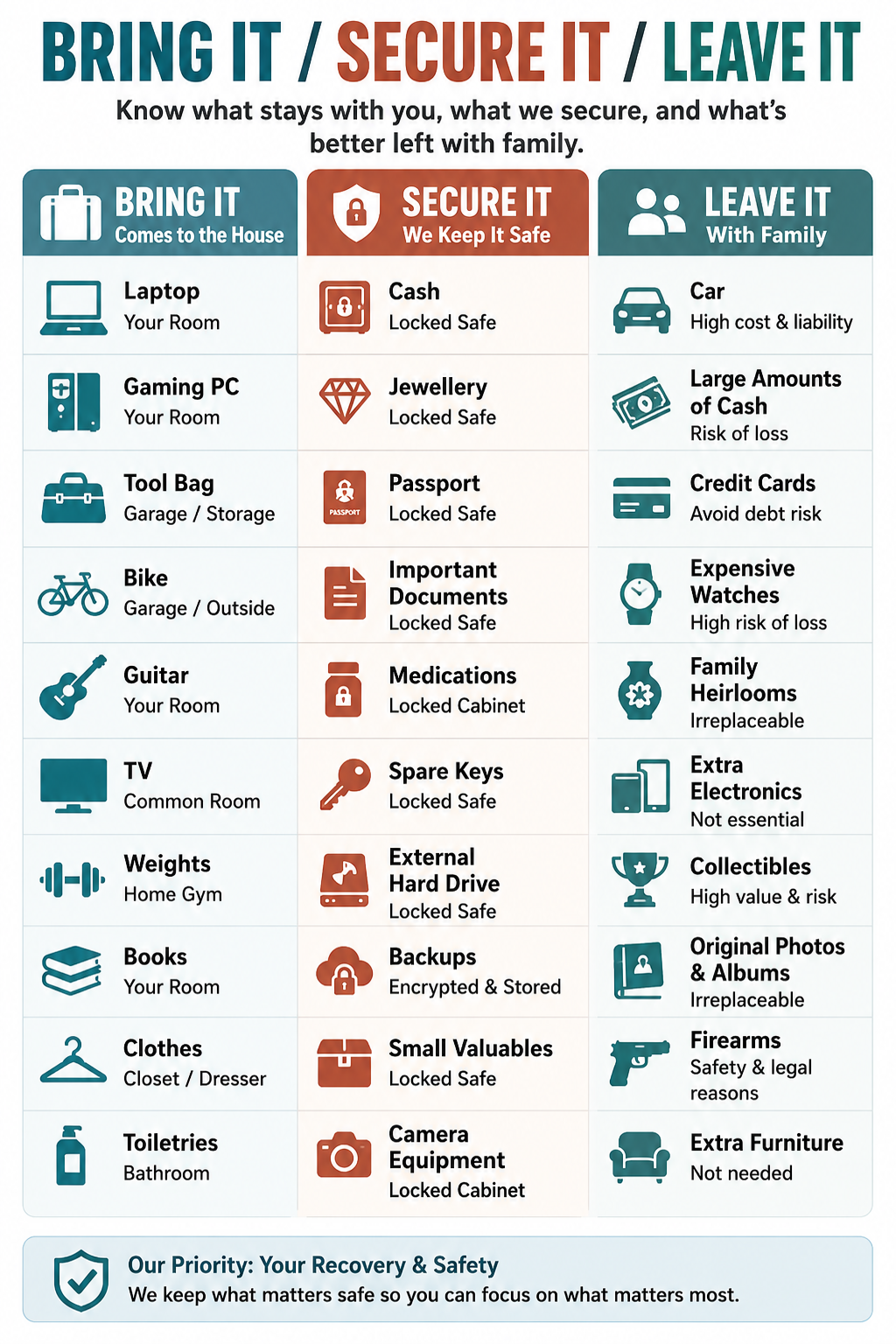
What Do You Need to Bring?
Not everything you own needs to come with you to sober living. Start with the belongings you use regularly, then consider what may need extra space, secure storage, or special arrangements before move-in.
Cars and Parking
A car can be important if you rely on it to get to work, attend appointments, or handle everyday errands. Whether you can keep one at a sober living home depends on the home's parking arrangements and guidelines.
Some homes may have parking on the property, while others may rely on street parking. Local permits or parking rules may also apply. You can also look at sober living home locations to compare the areas where they are available and consider parking and transportation before moving in.
Insurance and registration should remain current as well.
It is also useful to know what happens if parking is full or your car breaks down. A vehicle that cannot be driven may not be able to remain parked at the home indefinitely, particularly where spaces are limited.
If you rely on your car for work, confirm the home's parking and vehicle expectations before moving in. The same applies to giving rides to other residents. Having a vehicle for your own transportation does not necessarily mean there are no guidelines around transporting other residents.
Computers and Gaming Setups
A computer may be necessary for work, school, job applications, or staying connected. A gaming computer can require more planning because a complete setup may include a desktop, monitor, keyboard, speakers, and other equipment.
If you are wondering whether to bring a computer to sober living, check the sober living home's rules, guidelines, and available space. A laptop is usually easier to store than a full desktop setup.
Security is another consideration. Understanding how a home approaches personal property and security can help you decide what to bring and what may be better stored elsewhere. Keep valuable electronics in your personal space or an appropriate secure location when possible.
Work Tools
For people in the trades, tools can represent a significant investment and may be essential for earning a living.
A mechanic, electrician, carpenter, or contractor may need several bags or cases of equipment. Before bringing everything, find out what storage is available and whether there is enough room to keep your tools organized and secure.
You may not need every specialty tool you own. Bring the tools you use regularly and consider leaving specialty equipment with family when you rarely need it.
Bikes and Sports Equipment
Bikes, weights, guitars, golf equipment, and similar items can be useful but may take up considerable space.
If you use a bike for transportation or exercise, bringing it may make sense. Equipment you rarely use may be easier to leave with family.
Check where larger items can be kept before moving them in. Even when an item is allowed, it should not interfere with bedrooms, walkways, or shared spaces.
Where Will All Your Belongings Be Stored?
Sober living storage can help keep valuable or personal belongings separate from shared areas.
Before move-in, it helps to know what storage you'll have and which items may need special arrangements.
Everyday Items
- Clothing & shoes: Assigned closet or bedroom storage
- Toiletries: Personal bathroom or bedroom storage
- Luggage: Space available within the home
- Electronics: Kept in your personal space when not in use
Items That Need More Planning
- Work tools: Ask about available storage
- Large equipment: Confirm where it can be kept
- Important documents: Keep in a secure personal location
- Valuables: Consider whether they need additional security
Depending on the home, this may include personal storage, lockable areas, or other designated spaces. The exact arrangements can differ, so confirm what is available before bringing expensive electronics, documents, jewelry, or tools.
If you have belongings you rarely use or would be difficult to replace, consider leaving them with a trusted family member rather than bringing them into a shared home.
What Happens If You Need to Leave Unexpectedly?
Plans can change after you move in. You may need to leave for a period of time, move somewhere else, or have someone you trust collect your belongings.
Before moving in, find out how the sober living home handles belongings in that situation. Ask how long items can remain there and whether a family member or trusted person can collect them for you.
This is particularly important when you have work tools, electronics, or other belongings that would be difficult to replace.
Understanding What Isn't Permitted
Sober living homes have rules about items that could interfere with a safe, recovery-focused shared environment.
At Design for Recovery, residents should expect restrictions around alcohol, illegal drugs, and drug paraphernalia, along with other items that may create safety or household concerns.
It's also important to separate prohibited items from items that simply require planning. A car, large tool collection, gaming setup, or piece of exercise equipment may not be prohibited, but there may be limits on where it can be kept or how much space it takes up.
Before move-in, ask admissions about anything you're unsure about, particularly:
- Alcohol or substances
- Drug paraphernalia
- Items that could create a safety concern
- Large or bulky equipment
- Items that require special storage
- Anything you're unsure is compatible with house rules
House policies can vary by residence, so don't rely on assumptions based on another sober living home.
Bring What You Need, Know What to Expect
Moving into sober living does not mean giving up everything you own. It means learning how to manage your belongings within a shared home and following the expectations that help everyone live together.
Before move-in, ask specific questions about your car, work tools, computer, storage, parking, and any other item that matters to you. Getting clear answers ahead of time can prevent unnecessary problems later.
Design For Recovery's admissions team can explain the current rules for the specific home you're considering and help you understand what to expect before you move in.
- Start With What You’re Bringing
- What Do You Need to Bring?
- Where Will All Your Belongings Be Stored?
- What Happens If You Need to Leave Unexpectedly?
- Understanding What Isn't Permitted
Begin Lasting Sobriety Now!



Frequently Asked Questions About Men's Sober Living in Los Angeles
In many cases, yes, but parking availability and vehicle requirements vary by home. Ask about the specific house before bringing your car.
A personal computer may be allowed. If you have a large or expensive setup, confirm the available space and storage arrangements with the admission team.
You can discuss your tools with admissions before moving in. If they are valuable or bulky, ask specifically about available storage.
Whether you can keep valuable belongings depends on the home's storage options. Personal or lockable storage may be available, while irreplaceable or rarely used items may be better kept with family.
This completely depends on the home's guidelines. Having a car does not automatically mean you can regularly transport other residents.
You should ask about the home's process before moving in, including how long belongings can remain there and whether someone you trust can collect them.
- Reddit user. (2025). Sober living: Any tips, stories, things I should know? [Online forum post]. Reddit. https://www.reddit.com/r/addiction/comments/1mecn5s/sober_living_any_tips_storys_things_i_should/