 (424) 242-1130
Reddit User Asks
“I was homeless as hell warriors. Sleeping in your car for 3 days is you just pretending you are better than asking for help. That is what I did. Turns out there was a place for me to lay my head while I built up a few paychecks the entire time. I am 30, I do not do drugs, and I do not have a criminal record. Guys PLEASE remember that you do not have to sleep in your car ever again. Suck it up and ask for help.”
For some veterans, rebuilding stability starts with having a reliable place to live while returning to work, saving money, attending appointments, and maintaining recovery. Finding the right housing can provide a consistent base while those other parts of life begin moving forward.
The experience above highlights something broader than one person's housing situation. Accepting help can provide time and stability to work, save money, keep appointments, and decide what comes next.
Veterans in Los Angeles may have access to Veterans Affairs services and housing resources, while private sober living serves a different purpose. Understanding how these options differ and where they can exist alongside one another can help you decide what kind of living environment supports your next step.
How Can Sober Living Support Veterans Building Stability in Los Angeles?
Private sober living is different from a Department of Veterans Affairs housing program. It provides a substance-free residential environment where residents live with peers and follow the expectations of the home.
For a veteran rebuilding day-to-day stability, that environment can provide a consistent place from which to focus on responsibilities such as:
- Maintaining employment
- Building savings
- Attending Veterans Affairs appointments
- Managing transportation
- Following a regular daily routine
- Staying connected to a recovery community
- Planning for longer-term housing
Sober living is not a replacement for healthcare or veteran-specific services. Veterans can continue using the services for which they are eligible while living in private housing.
The right option depends on what you actually need. Some veterans may need housing assistance through the Department of Veterans Affairs. Others may already have income and healthcare in place but want the accountability and community of a sober living home.
How Can Sober Living Work Alongside Veterans Affairs Services?
Veterans Affairs Greater Los Angeles connects eligible veterans with different forms of housing and support. These programs should not be treated as interchangeable with private sober living.
Understanding the distinction is especially important when deciding where to live and how housing will be paid for.
What Support Programs Are Available to Veterans?
Veterans in Greater Los Angeles may have access to several programs depending on their eligibility and circumstances.
Some of the major options include:
- HUD-VASH: Combines Department of Housing and Urban Development rental assistance with Veterans Affairs case management for eligible veterans.
- Supportive Services for Veteran Families: Helps eligible veterans and families experiencing or at risk of homelessness with housing stability and connections to other resources.
- Transitional housing: Temporary housing options may be available for eligible veterans experiencing homelessness.
- Other Veterans Affairs services: Eligible veterans may also use healthcare and other support services separately from their housing arrangement.
Eligibility, availability, and the type of assistance provided differ between programs. Check with Veterans Affairs Greater Los Angeles for current information about the resources that may apply to you.
How Private Sober Living Fit Alongside Veteran Services?
Private sober living is not HUD-VASH, Supportive Services for Veteran Families, or Veterans Affairs transitional housing.
Instead, it is a separate residential option for someone who wants a substance-free home with community and accountability.
A veteran might therefore use Veterans Affairs healthcare or other eligible services while paying privately for sober living. The exact combination depends on the veteran's circumstances and program eligibility.
Do not assume a Veterans Affairs housing program will pay for a particular private sober living home. Before including housing assistance in your budget, confirm whether the residence and expense qualify under the specific program.
If sober living is one of the options you are considering, contact our team and learn what everyday living with us looks like.
Why Location Matters When You're Using VA Services
Housing location becomes especially important when Veterans Affairs appointments are a regular part of your week.
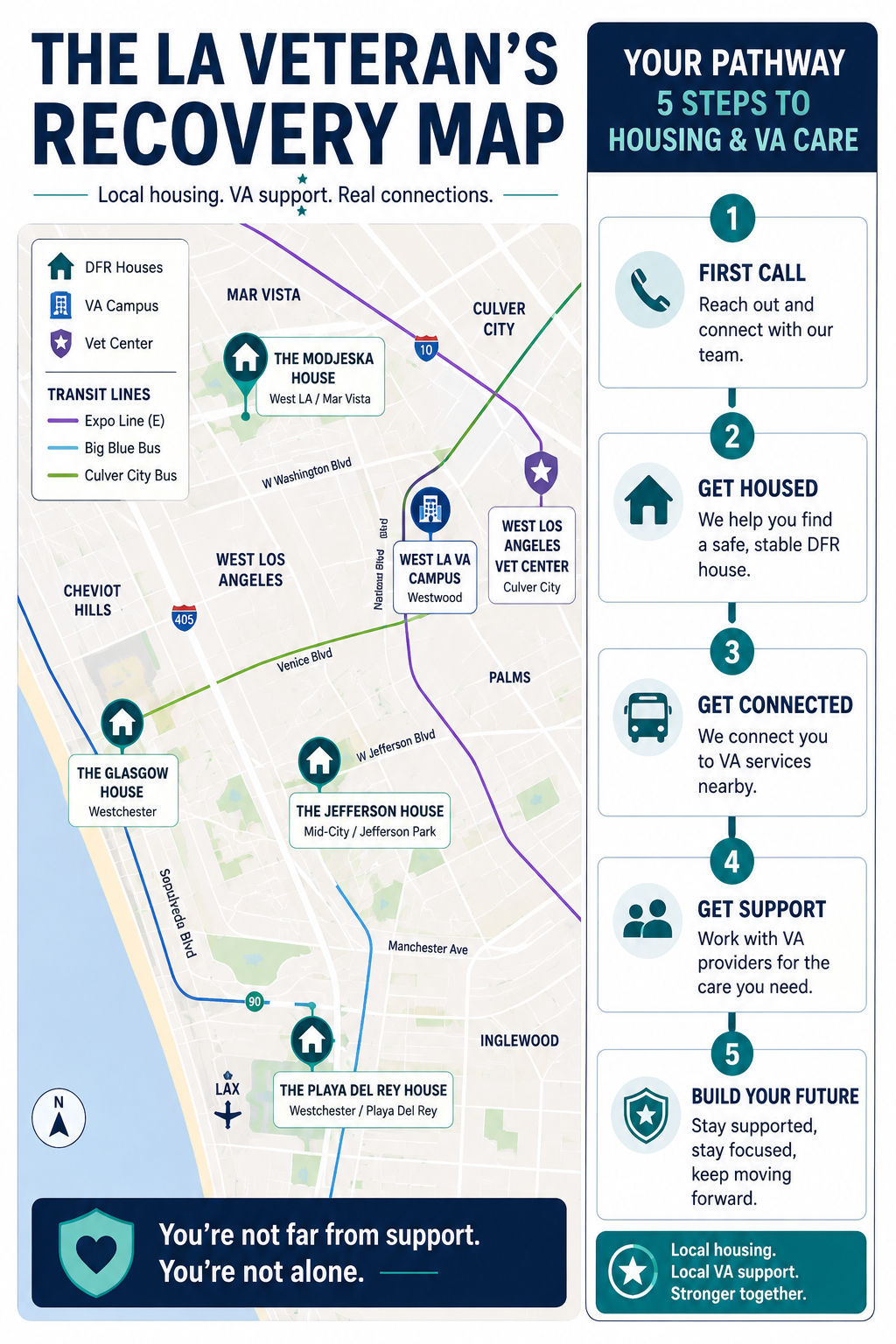
The West Los Angeles Veterans Affairs Medical Center is an important destination for veterans who regularly use services on the campus. When choosing sober living, consider how the location works with your appointments, employment, and transportation needs.
Design for Recovery has sober living homes for veterans using the West Los Angeles campus, and location can therefore be one of the many benefits to consider when comparing homes.
Getting to the West Los Angeles Veterans Affairs Campus
Do not choose a home based only on the words “West Los Angeles.” Check the actual trip you would need to make.
Before moving, consider:
- How often will you visit the campus?
- Which building will you need to reach?
- Will you drive or use public transportation?
- How long should you allow for the trip?
- Do appointment times work with your job and house schedule?
The West Los Angeles campus is large, so knowing the building for an appointment can also help with planning. Veterans Affairs provides an official campus map and directions for visitors.
Balancing Sober Living Costs, Benefits, and Employment
Housing needs to work financially as well as geographically.
Veterans may have income from employment, disability compensation, or other eligible benefits. The important step is determining what income you can reliably use each month rather than assuming a particular veteran program will cover private housing.
A simple starting budget can include:
- Housing
- Transportation
- Food
- Phone
- Debt or other required payments
- Personal expenses
- Savings
Using Service-Connected Disability Compensation for Living Expenses
Veterans Affairs disability compensation is a monthly tax-free benefit for eligible veterans with qualifying service-connected disabilities. Payment amounts depend on factors including the disability rating and, in some cases, dependent status.
If you receive disability compensation, it forms part of your personal income and can be considered when working out what housing costs you can afford.
That is different from saying Veterans Affairs is paying the sober living home. Before relying on any housing-specific assistance, confirm the rules of that particular program.
Building Employment Into Your Next Steps
For veterans who are able and planning to work, employment can be another part of building financial stability.
Consider more than the paycheck itself. Ask whether the job location, hours, commute, and schedule work with your other responsibilities.
Design for Recovery's employment support can also be considered by men who want support around employment while living in sober living.
Building a few paychecks, as the veteran in the Reddit discussion described, can create more room to plan what comes next.
What Should You Look for in a Sober Living Home?
Shared housing can feel different for every veteran. The fact that someone else served does not necessarily mean you will have the same routines, preferences, experiences, or needs.
Before choosing a home, think about what makes everyday living manageable for you.
Sleep, Noise and Personal Space in a Shared Home
Post-traumatic stress disorder, traumatic brain injury, sleep difficulties, or sensitivity to noise can affect what someone needs from a shared environment.
A sober living home does not diagnose or manage these conditions. However, you can still ask practical questions about the environment before moving in.
For example:
- How many people share a bedroom?
- What are the home's quiet hours?
- How is personal storage handled?
- What are the expectations around noise?
- What common spaces are available?
- What happens if roommates have different schedules?
If you have healthcare needs related to post-traumatic stress disorder, traumatic brain injury, sleep, or another condition, discuss those needs with an appropriate healthcare professional separately from your housing questions.
Living With Other Veterans or in a Mixed Sober Living Home
A veteran-only environment may appeal to someone who wants to live around people with shared military experiences. For another veteran, that may not be important.
A mixed sober living home can also offer advantages. Residents may have different backgrounds while sharing the common goal of maintaining a substance-free living environment.
Rather than assuming one is better, consider:
A veteran-focused home may appeal if you value:
- Shared military experience
- Veteran-centered resources
- A community primarily made up of other veterans
A mixed sober living home may appeal if you value:
- A broader peer community
- Connections outside veteran circles
- Choosing a home primarily around location, house environment, and daily routine
The more useful question is whether you feel comfortable in the home and whether its expectations align with what you need from your living environment.
Finding the Right Fit for Your Next Stage of Recovery
Housing can provide a stable base while you focus on employment, appointments, finances, and other responsibilities. For veterans, the right combination of housing and available veteran resources will depend on individual needs and eligibility.
At Design for Recovery, we provide men’s sober living in Los Angeles with a substance-free environment, community, and accountability. Our homes can provide a consistent place to live while you continue building the routines and stability you want for what comes next.
- How Can Sober Living Support Veterans Building Stability in Los Angeles?
- How Can Sober Living Work Alongside Veterans Affairs Services?
- Why Location Matters When You're Using VA Services
- Balancing Sober Living Costs, Benefits, and Employment
- What Should You Look for in a Sober Living Home?
Begin Lasting Sobriety Now!



Frequently Asked Questions
Yes. Veterans can consider private sober living in Los Angeles, subject to the admission requirements of the individual residence. If you use Veterans Affairs services or benefits, confirm whether your housing choice affects the requirements of any specific program.
Do not assume Veterans Affairs will pay for a private sober living home. HUD-VASH, Supportive Services for Veteran Families, and other housing resources have their own eligibility and housing requirements.
Yes, veteran-focused sober living and recovery housing options may be available. Veterans can also consider mixed sober living homes based on their preferences, location, and living environment.
Yes, employment can generally be part of everyday life in private sober living, although individual homes have their own schedules and expectations.
Compare sober living locations with the Veterans Affairs facilities you visit regularly. Consider transportation, work, appointments, and other weekly responsibilities when choosing a home.
- Reddit user. (2019). Hey guys, I just entered a VA supported halfway house [Online forum post]. Reddit. https://www.reddit.com/r/Veterans/comments/c8jb49/hey_guys_i_just_entered_a_va_supported_halfway/
- U.S. Department of Veterans Affairs. (n.d.). Homeless veteran care. VA Greater Los Angeles Health Care. https://www.va.gov/greater-los-angeles-health-care/health-services/homeless-veteran-care/
- U.S. Department of Veterans Affairs. (n.d.). West Los Angeles VA Medical Center. VA Greater Los Angeles Health Care. https://www.va.gov/greater-los-angeles-health-care/locations/west-los-angeles-va-medical-center/
- U.S. Department of Veterans Affairs. (n.d.). VA disability compensation. https://www.va.gov/disability/



Written By
David Beasley