 (424) 242-1130
Finding the right sponsor in Alcoholics Anonymous (AA) can profoundly influence one’s path to sobriety. A sponsor isn’t merely an adviser but a beacon of hope, representing someone who has overcome the perils of addiction and is eager to guide others.
With a vast global membership exceeding 2 million, AA fosters a deep pool of potential sponsors, rendering the selection process both vital and, at times, overwhelming. Choosing an appropriate sponsor can mean the difference between fragmented recovery and a sustained commitment to sobriety.
While the pursuit may initially seem formidable, grasping the essence of sponsorship and the strategies to pinpoint a compatible mentor can simplify this pivotal decision. Through this exploration, we aim to elucidate the steps in securing that invaluable ally in your AA journey.
What is an AA Sponsor?
An AA sponsor is someone who has experience with the 12 Steps and can guide a newcomer through the recovery process. Sponsors share their own experiences, strength, and hope to help others overcome challenges in their recovery journey.
They provide a listening ear, offer advice, and help the person navigate difficult situations, making the journey to sobriety less isolating. Having a sponsor is a core component of the 12 Traditions and is essential for many in maintaining long-term sobriety.
When do you get an AA sponsor?
Soon after starting AA meetings, having a sponsor can provide immediate support, preventing early relapses. It’s essential, however, to feel comfortable and ready for this step. Some might choose a sponsor after a few meetings, while others may attend several sessions before feeling ready to commit. The key is recognizing when you could benefit from personalized guidance and support on your journey to sobriety.
Why do you need a Sponsor in AA?
In Alcoholics Anonymous, a sponsor is pivotal, serving as a mentor and a guide throughout the recovery journey.
Here are some key roles and responsibilities:
Sharing Personal Experiences:
Drawing from their journey, sponsors provide firsthand insights into the challenges and triumphs of recovery. This imparts practical advice and offers hope to those starting their journey.
Guidance Through the 12 Steps:
A cornerstone of AA is the 12-step program. Sponsors assist sponsees in understanding and working through each step, ensuring they grasp its essence and purpose.
Emotional Support:
Overcoming addiction is an emotional rollercoaster. Sponsors are there to provide support and listen to concerns, fears, and victories, ensuring no one feels alone in their journey.
Accountability:
Sponsors help maintain a sponsee’s commitment to sobriety, reminding them of their goals and the reasons they sought recovery in the first place.
The sponsorship bond is built on trust, experience, and dedication. Their role extends beyond mere guidance; they symbolize the success and possibility of a life free from addiction’s grasp.
Why is Finding the Right Sponsor Crucial?
Choosing the right sponsor in AA is foundational to successful recovery, as their influence can significantly shape the trajectory of one’s sobriety, fostering trust and providing personalized guidance tailored to individual needs.
The relationship between a sponsor and sponsee is a profoundly personal bond, with several pivotal aspects:
Impact on Recovery:
A sponsor’s influence can bolster or hinder a sponsee’s progress. A positive, understanding, and experienced sponsor can provide support, making challenging moments more navigable.
Trust and Understanding:
Recovery unveils a plethora of emotions and vulnerabilities. It’s paramount for a sponsee to trust their sponsor implicitly, ensuring they can share their deepest fears and challenges without judgment. This trust fosters a conducive environment for healing and growth.
Personalized Guidance:
Each person’s journey with addiction is unique. The right sponsor understands this individuality, tailoring their advice and support to suit the specific needs of their sponsee.
Securing the right sponsor isn’t just about enhancing the recovery process; it’s about ensuring the journey to sobriety is as supported, understood, and effective as possible. This bond becomes a cornerstone of a renewed, sober life.
How to Find a Sponsor in AA?
To secure an effective sponsor in AA, one needs to actively participate in the community by attending meetings, listening intently for similar experiences, raising one's hand to express their need, and inquiring about their journey in sobriety, which are the first few initial steps. This approach ensures you’re proactive in your search and positions you to find a sponsor that best resonates with your journey. Let’s delve deeper into these methods:
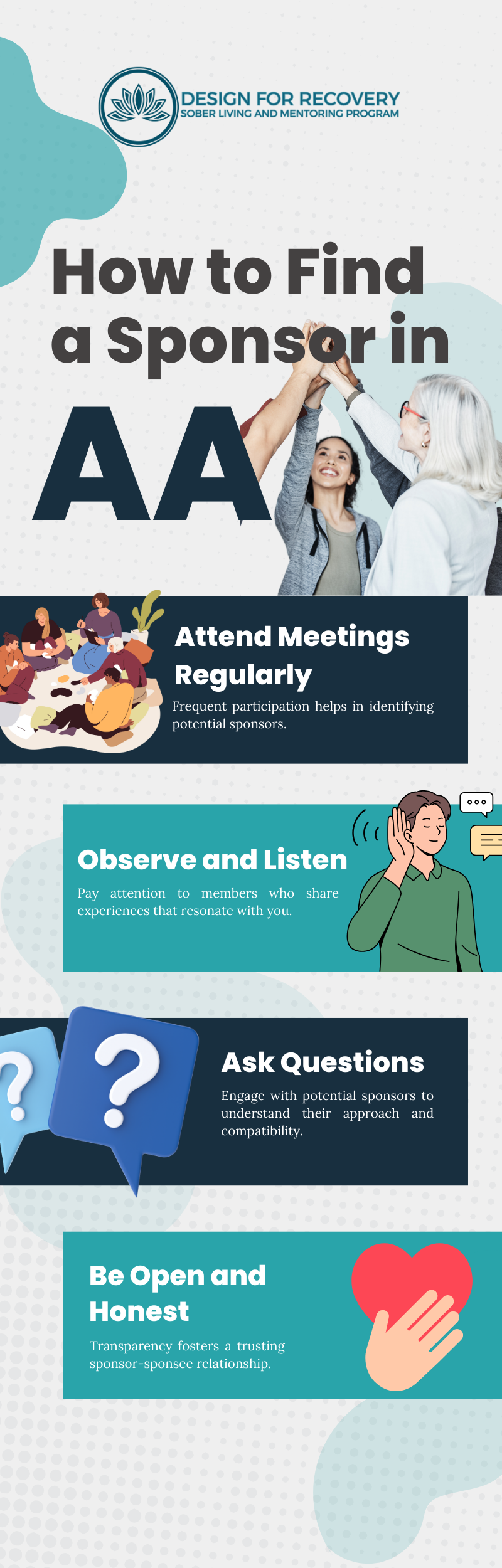
How to Choose the Right AA Sponsor for Your Recovery?
Finding a sponsor in Alcoholics Anonymous (AA) is one of the best things you can do for your recovery. So, how do you find the right one?
Go to Meetings and Start Connecting
First things first, you’ve got to show up. The best way to find a sponsor is to attend meetings regularly. You’ll get a feel for who’s who in the AA community. Not all meetings are the same—there are open discussions, speaker meetings, and study groups. Attend a variety, so you can find what resonates with you. After the meeting, try sticking around for a coffee or chat. It’s a great way to meet people and start building connections.
Listen for the Similarities
Pay attention during meetings. Listen closely to others’ stories and experiences. Who shares things you can relate to? If someone’s been through what you’re going through, they might just be the sponsor you need. Also, listen for their sponsorship style, some people prefer a more hands-on approach, while others give a little more space. It's all about finding someone whose style fits your recovery needs.
Raise Your Hand and Ask
Don’t be shy! If you’re ready to find a sponsor, raise your hand during the meeting or afterwards and ask for help. It’s perfectly okay to say, “Hey, I’m looking for a sponsor, anyone interested?” Being open and upfront is a big part of the process.
Ask About Their Experience
Before you commit to a sponsor, take a minute to ask about their sobriety journey. How long have they been sober? What kind of work are they still doing on their recovery? It’s important to know that they’re not only experienced but actively involved in maintaining their own sobriety.
Choose Someone You Can Be Honest With
One of the most important aspects of a sponsor-sponsee relationship is honesty. You need someone you feel comfortable opening up to, someone who can listen to your fears, struggles, and challenges without judgment. A strong sponsor relationship is built on trust, so make sure you feel that connection before committing.
Think About Their Length of Sobriety
While someone with long-term sobriety can offer valuable insights and experience, a sponsor with a bit less time might still have fresh knowledge of the challenges you’re facing. The key is finding someone who feels like they can guide you through your journey, regardless of their exact length of sobriety.
Sponsor’s Gender: What Works for You?
When it comes to choosing a sponsor, think about whether you’d feel more comfortable with a same-gender sponsor or not. Some people prefer having a sponsor of the same gender, while others may feel fine with anyone who resonates with their recovery needs. For men especially, being around other men in recovery can make honesty and accountability feel more natural from the start. Whatever you choose, make sure the relationship is professional, focused on growth, and free from distractions.
Avoid Romantic Entanglements
It’s really important to keep the relationship between you and your sponsor platonic. Having a romantic interest with your sponsor can blur boundaries, shift focus, and derail your recovery. The goal is to have a supportive, healthy relationship built on sobriety, not romantic feelings.
Be Available for Communication
A good sponsor is someone who’s available to help when you need it. But this is a two-way street, you’ll also need to be ready to communicate openly with them. Whether it's through calls, texts, or in-person chats, consistent communication is key to staying on track.
Attend Meetings Together
If you can, attend meetings with your sponsor. It’s a great way to bond, reflect on what’s discussed, and feel supported in the process. Your sponsor can introduce you to others in the community, helping you feel more connected and engaged in your recovery.
For those in LA, pairing sponsorship with a structured sober living environment in Los Angeles can reinforce that community connection day to day.
How to Find an AA Sponsor Online?
Finding an online AA Sponser can be just as effective as in-person meetings. The key is to approach the process with the same care and commitment. Here’s a simple guide on how to find an online AA sponsor:
1. Attend Virtual AA Meetings Regularly:
Join online meetings on platforms like Zoom or AA-specific websites. Consistent attendance helps you connect with potential sponsors who share similar experiences.
2. Participate in Online AA Communities:
Engage in AA forums and social media groups dedicated to sobriety. Post about your search for a sponsor, and be open to recommendations from others.
3. Reach Out to Potential Sponsors:
When you find someone who resonates with you, ask if they’re willing to sponsor you. Be clear about your intentions and commitment to recovery.
4. Use Online Communication Tools:
Agree on the best communication method with your sponsor, whether it's video calls, text, or emails to stay in touch and keep the support consistent.
What are the Benefits of Having an AA Sponsor?
Having an AA sponsor furnishes you with expert guidance, emotional support, accountability, and a shared connection through the recovery journey. A sponsor’s role is invaluable, acting as a seasoned guide as they provide:
Expert Guidance:
From their personal experiences, sponsors offer practical advice on navigating sobriety’s unique challenges.
Emotional Support:
An AA sponsor listens during tough times, ensuring you never walk your journey alone.
Accountability:
Regular check-ins with someone accountable can deter relapses by promoting responsibility. Understanding accountability in recovery more broadly can also help clarify what to look for in a sponsor relationship.
Shared Experiences:
Sponsors resonate with the struggles and triumphs of the recovery process, offering genuine empathy.
Networking:
Sponsors, through their journey, often have valuable connections within the AA community that are beneficial to newcomers.
What are the characteristics of a Beneficial AA Sponsor Relationship?
A beneficial AA sponsor relationship thrives on open communication, trust and confidentiality, commitment, empathy, and respectful boundaries. To foster a strong bond during the recovery journey:
Open Communication:
Any topic can be discussed, ensuring no concerns remain hidden.
Trust and Confidentiality:
Personal stories and feelings shared are met with discretion and understanding.
Commitment:
The sponsor and sponsee are wholly devoted to the recovery process.
Empathy:
The sponsor’s genuine emotional support is rooted in understanding the sponsee’s experiences.
Respectful Boundaries:
While maintaining a close bond, respecting each other’s boundaries is understood, promoting a healthy relationship dynamic.
How to Approach a Potential Sponsor?
To initiate a conversation with a potential AA sponsor, begin by understanding your reasons for wanting a sponsor, set clear goals, and be respectful of their time.
Mental Preparation:
Before reaching out, take a moment to reflect on your sobriety journey. Understanding your reasons for wanting a sponsor will help tailor the conversation to your unique needs. You may be looking for someone who has dealt with specific challenges, or you may want a mentor who aligns with your long-term sobriety goals.
Respect for Time:
It’s essential to remember that AA sponsors volunteer their time to help others in recovery. As such, they often have multiple commitments. Arrange a designated time to sit down and chat, ensuring the meeting is mutually beneficial and free from distractions.
Openness:
Starting a conversation about sponsorship can be daunting. However, it’s crucial to remember that every AA member has been in your shoes. You’re more likely to foster a genuine connection by approaching the situation with vulnerability and sincerity.
What Questions Should You Ask a Potential Sponsor?
When considering a potential AA sponsor, inquire about their approach to challenges, recovery journey, and availability.
- “How do you typically handle disagreements or challenges with sponsees?”: This question helps gauge their conflict resolution skills and ensures that both parties will handle disputes maturely.
- “What was the hardest part of your recovery, and how did you handle it?”: By understanding their struggles, you can better determine if their experiences align with yours. Additionally, their methods of overcoming obstacles can provide insight into their coping mechanisms and resilience.
- “Do you have other sponsees? If so, how do you manage your time between them and other commitments?”: This query provides clarity on their availability and dedication.
What if the AA Sponsorship Isn't Working Out?
It might be time to reassess the relationship if you’re experiencing consistent disagreements, feel judged, or notice that your recovery philosophies diverge significantly from your sponsor’s.
Regular Check-ins:
By scheduling frequent check-ins, both parties can assess the health of the sponsor-sponsee relationship. These can act as a platform to voice concerns, discuss progress, and ensure that both parties are on the same page.
Open Communication:
It’s crucial to maintain an open line of communication. Addressing concerns as they arise makes it possible to avoid bigger issues down the line. Your sponsor should be someone you feel comfortable discussing your recovery with—without fear of judgment or retribution.
Consider Transitioning:
While finding a new sponsor might seem daunting, remember that your recovery is the top priority. If you believe another sponsor might be a better fit, don’t hesitate to communicate your feelings and make the necessary change.
When should you find a new AA sponsor?
Signs indicating that it might be time for a new AA sponsor include significant differences in recovery philosophies, feelings of being judged, and evolving needs not being met.
Divergent Recovery Philosophies:
As you delve deeper into your recovery, you may find that you and your sponsor have different beliefs about the recovery process. For instance, your sponsor might advocate for a stricter interpretation of the 12 steps, while you might favor a more flexible approach.
Feelings of Judgment:
A successful sponsor-sponsee relationship hinges on mutual respect. It might be time to reevaluate the relationship if you ever feel that your sponsor is judging you or invalidating your experiences.
Evolving Needs:
As you grow and change over time, what you need in a sponsor might also develop. It’s essential to ensure that your sponsor can meet your current needs, whether that means more regular check-ins or different coping strategies.
Some people also find that combining sponsorship with a sober living program gives them more consistent structure and support between check-ins.
- What is an AA Sponsor?
- Why do you need a Sponsor in AA?
- Why is Finding the Right Sponsor Crucial?
- How to Find a Sponsor in AA?
- How to Choose the Right AA Sponsor for Your Recovery?
- How to Find an AA Sponsor Online?
- What are the Benefits of Having an AA Sponsor?
- What are the characteristics of a Beneficial AA Sponsor Relationship?
- How to Approach a Potential Sponsor?
- What Questions Should You Ask a Potential Sponsor?
- What if the AA Sponsorship Isn't Working Out?
- When should you find a new AA sponsor?
Begin Lasting Sobriety Now!


Frequently Asked Questions
While individuals traditionally have one primary sponsor in AA, some choose to have co-sponsors or secondary sponsors for different perspectives or additional support.
The choice of the sponsor’s gender is personal; however, many recommend choosing someone of the same gender to avoid potential complications or distractions.
If your sponsor relapses, it’s essential to prioritize your own recovery and consider seeking a new sponsor while expressing concern and support for them.
Communication frequency varies based on individual needs, but many sponsees and sponsors start with daily or weekly check-ins and adjust as necessary.
While the primary role of a sponsor is guidance in sobriety, strong bonds can form, and some sponsor-sponsee relationships evolve into lifelong friendships.
Attending local AA meetings and expressing interest in finding a sponsor is the most direct way to connect with potential sponsors in your area.
Online AA forums, websites, and virtual meetings often have resources or platforms where individuals can connect with potential sponsors remotely.
NAWS?: Find A meeting. (n.d.). https://www.na.org/meetingsearch/
Pettersen, H., Landheim, A., Skeie, I., Biong, S., Brodahl, M., Oute, J., & Davidson, L. (2019). How Social Relationships Influence Substance Use Disorder Recovery: A Collaborative Narrative Study. Substance Abuse: Research and Treatment, 13. https://doi.org/10.1177/1178221819833379 Thackray, L. (2022, November 9). The rise of Sober Tourism. The Independent. https://www.independent.co.uk/travel/inspiration/sober-tourism-alcohol-free-lifestyle-hotels-b2217773.html The big book. Alcoholics Anonymous. (n.d.). https://www.aa.org/the-big-book



Written By
David Beasley